Dinnseanchas
A residency at the intersection of art, ecology and community, embedded in the uplands of Lyreacrompane, North Kerry.
Dinnseanchas — Envisioning the Uplands was an embedded residency commissioned by Hometree and funded by Creative Ireland, bringing seven socially engaged artists into six upland communities along Ireland's western seaboard. The project brought together art, community, agriculture, and ecology to explore the lore and topography of Ireland's uplands and challenge perceived divisions between nature and culture, human and more-than-human. Alongside artists working in the Borlin and Coomhola Valleys in Cork, Dromid and Corca Dhuibhne in Kerry, Mám in Galway, and Gartan in Donegal, Living Rhythms were situated in Lyreacrompane in the Stacks Mountains of North Kerry.
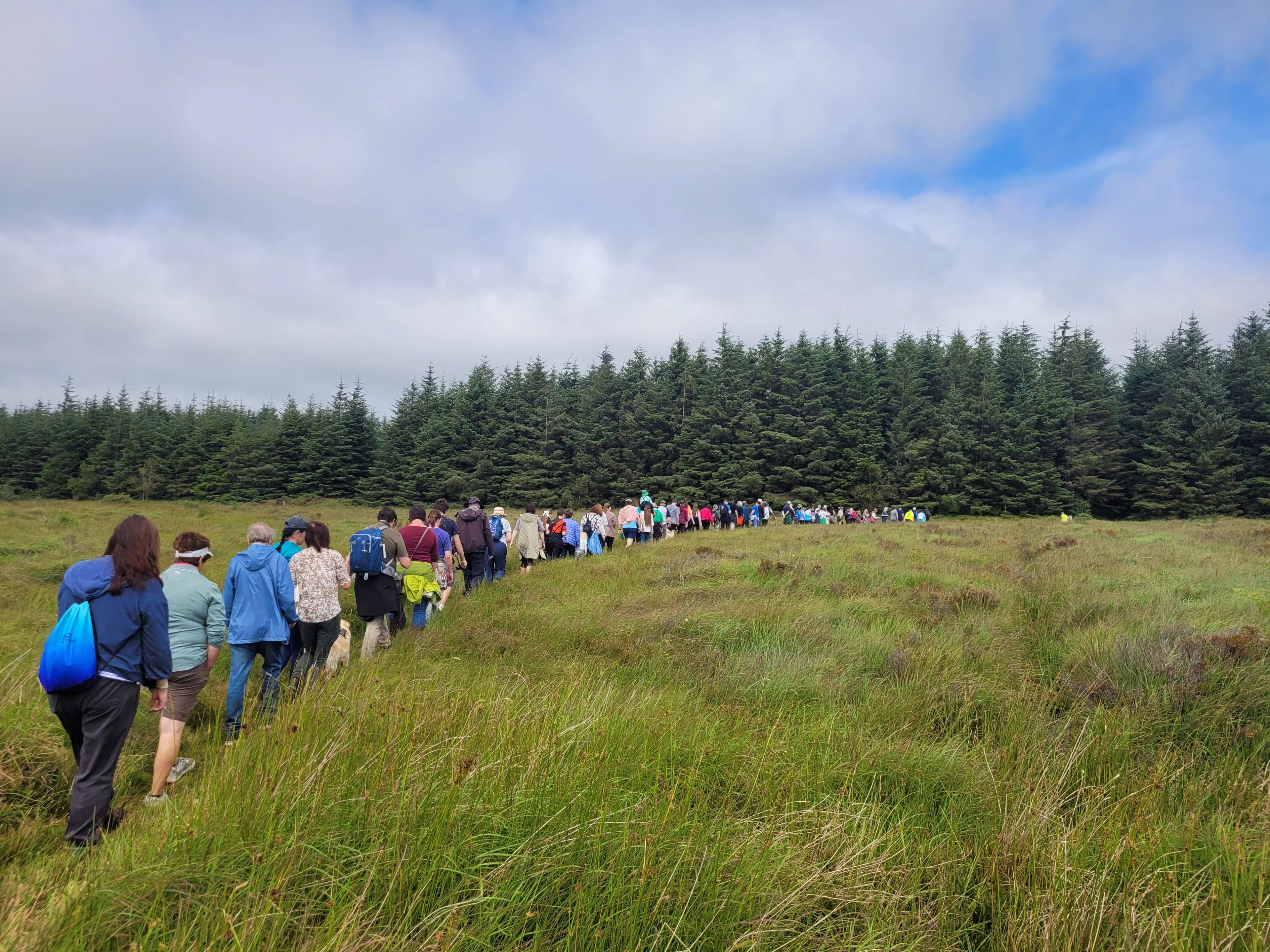
The name Ladhar an Crompáin means the fork between the converging rivers, the Crumpane and the Smearlagh. The townland is connected by the Mass Path along the banks of the Smearlagh, a route still walked today. The landscape is now characterised by Sitka Spruce plantation and wind turbines, and the conversation about land use here had a different texture and tensions from the other, predominantly agricultural, communities in the Dinnseanchas project.
For 18-months we were immersed in the landscape and stories of Lyreacrompane, engaging with farmers, ecologists, heritage groups, and the wider community. Through a participatory process of deep listening, conversation, gathering and walking the land, we collectively navigated complex issues such as climate change, biodiversity loss, and socio-economic challenges such as rural depopulation, to imagine how we can actively and justly transition towards a regenerative future.
We were openly welcomed by the community and throughout the process produced works centred on entangled systems, relationality and ecologies of people and place.
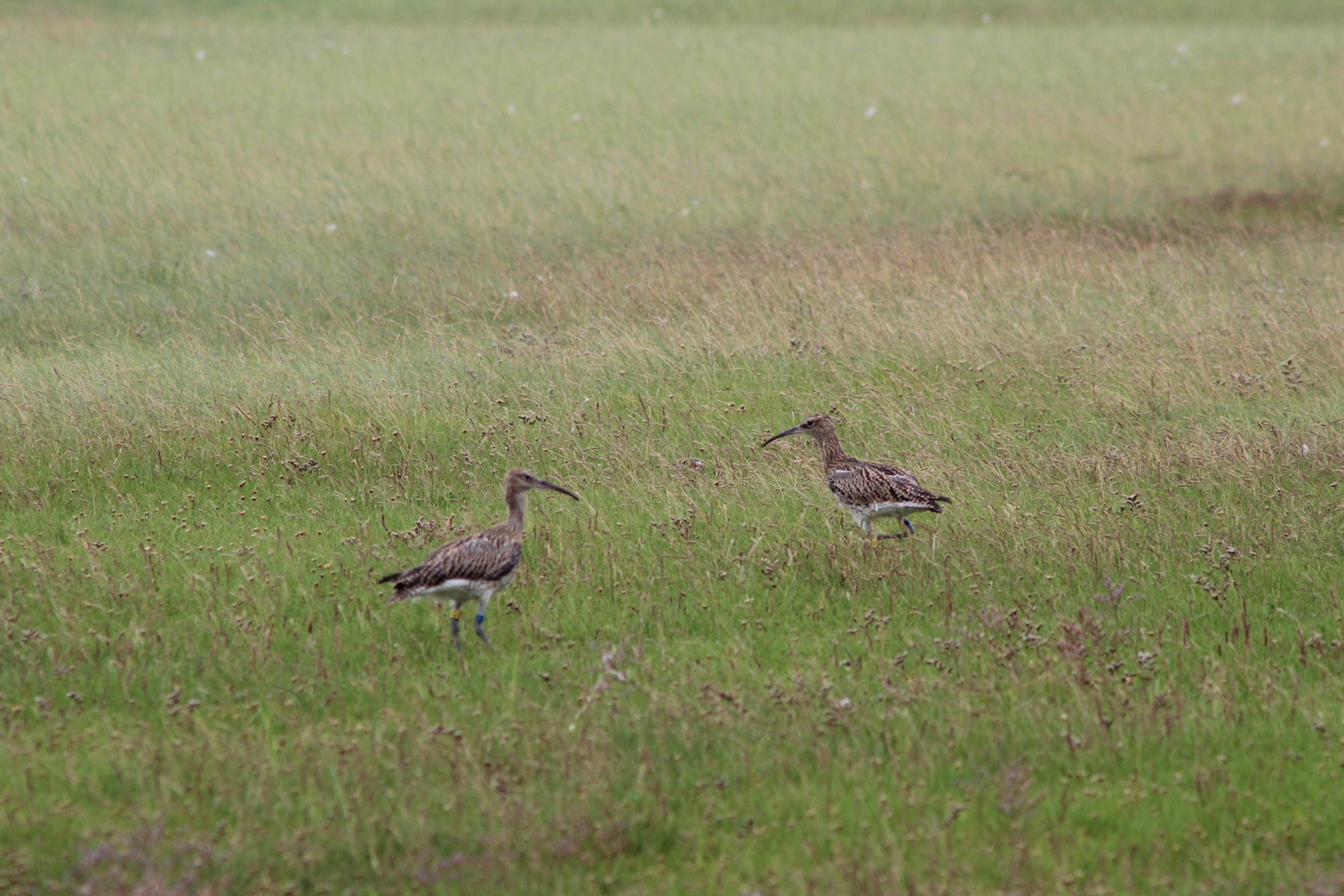
Showing Up is an experimental audio-visual performance centred on an intimate conversation with Tim O' Donoghue of Lyreacrompane. This narrative collage explores through Tim's years of living alongside North Kerry's last breeding pair of Curlew, his endurance of rural hardships, and his deep love of place. The sonic and visual landscape invites audiences to witness the entangled futures of human and more-than-human worlds, held together by the fragile work of care and conservation. Tim welcomed us into his world, sharing stories of living and working in Lyreacrompane, alongside the collective efforts to protect these endangered birds. The female Curlew sadly didn't return in 2026, so there is no longer any breeding pair of Curlew left in North Kerry.
The Little Library of Lyreacrompane also created during this time is a celebration of this rural upland community in North Kerry and their sustained efforts to keep the stories of their place alive for future generations. Lyreacrompane is a dispersed townland, where the main civic spaces such as the church, the pub, the post office, the school and the community centre are all connected by the mass path along the Smearlagh river. The shape of the installation reflects this vernacular map, built with Sitka Spruce, the product of the monocultural forestry covering large areas of the Stacks Mountains and galvanised steel commonly used in agricultural buildings.
The library itself contains 16 editions of the Lyreacrompane Journal, one of the longest running rural journals in Ireland. The journal edited by Joe Harrington with articles on the history of Lyreacrompane and the Stacks Mountains, images and text celebrating present moments in the area and pieces written by John B. Keane before he passed, who spent his childhood summers in Lyreacrompane. Many of the characters in his plays influenced by stories and people from the area including one of his most famous works 'The Field', inspired by true events in Lyreacrompane. We invited people to take a moment to sit and enjoy the stories in the journals.
Data sonification
Accompanying the library is a soundscape that translates the ecological and social transformation of Lyreacrompane into an immersive audio narrative through data sonification. The composition uses field recordings from the Stacks Mountains, the old Bord na Móna bog, turbines captured intimately and from afar, and the few remaining bird calls, as raw material, transforming them through statistical data from census records, conservation reports, and climate measurements. Together, they create a sonic testimony to a landscape where community efforts to protect the last breeding pair of Curlew, population changes, monocultural forestry, and industrial pressures intertwine. A place where data becomes dialogue about loss, resilience, and the urgent need for ecological and social awareness. Data Sources: CSO, NPWS , Met Éireann
Upland Transitions is an immersive radio broadcast and research poster exploring the complexities of just transition in Ireland's Uplands, a collage of community voices, ecological perspectives and Agri Time snippets from Kerry Radio. This was exhibited at the International Sustainability Transitions conference in Oslo. (June 2024) bringing Lyreacrompane's story into international research context and framing our methodology around the question: How can co-created artistic interventions, attuned to the rhythms of place and community, shape shared visions for regenerative futures?
Amuigh faoin Sliabh continuing from Upland Transitions, using our hacked vintage radio as a boundary object the work further evolved into an immersive audio installation featuring composer Colm Mac Con Iomaire’s composition ‘Amuigh faoin Sliabh,’ created during his time as Dinnseanchas composer in residence. The installation celebrates radio as a medium of connection and communication within rural settings. Exhibited at IMMA for EarthRising 2025.
#003 - Ecologies A show on Living Rhythms monthly residency on Éist, a community radio platform. Ecologies, a two-hour audio narrative weaving together field recordings, soundbites and music to explore Lyreacrompane's landscapes and wider ecologies.
003 Ecologies
Published Written Works
'Field Notes from Lyreacrompane 2036' - A speculative fiction short story imagining a future Lyreacrompane - published in Dinnseanchas/Hometree Publication & The Lyreacrompane Journal 2025
'The Call of the Curlew' - A piece about a particularly poignant experience with Tim O'Donoghue when observing the Curlew nest - published in HolyShow Magazine
Poetic Policies a workshop, designed and co-facilitated with poet Grace Wells, invites participants to reimagine Ireland's food policies through poetic forms and language. Using poetry not just as a creative exercise, but as a tool for deep listening, critical analysis, and collaborative visioning, participants will transform rigid policy frameworks into adaptive, regenerative visions. Through techniques like language analysis, redaction, and collective composition, the workshop bridges analytical and emotional understandings of food policy.
Works were exhibited at Hometree's Ardnaculla Summer School in Ennistymon in May 2025, before travelling to IMMA's Earth Rising Festival in Dublin that September, where it entered wider public conversation about the future of Ireland's rural uplands. Our work was also shared with the community in Lyreacrompane at the Dan Paddy Andy Festival and the Community Resource Centre. Dinnseanchas has been awarded a festival touring grant from the Arts Council and will feature in festivals around Ireland during 2026.
Credits
- Hosted by Hometree
- Funded by Creative Ireland (Creative Climate Action Fund, Strand II) and Arts Council (Touring of Work Scheme)
More work with Arts Council
Dinnseanchas Residency Artists & Locations: Living Rhythms (Lyreacrompane), William Bock (Borlin Valley), Síomha Brock (Uíbh Ráthach), Zoë Rush (Corca Dhuibhne), Peadar Tom Mercier (An Mám) & Róisín de Buitléar (Gartan)
Creative Support: Grace Wells, David Teevan, Jennifer Ahern & Colm Mac Con Iomaire
Photography: Myriam Riand, João Tudella, Barry O' Donoghue, Heather Griffin
Community, Collaborators & Contributors: Tim O’ Donoghue, Barry O’ Donoghue, Joe Harrington, Kay O' Leary, Paddy Halpin, Pat McKenna, Odhran Lyons, Erin Lyons, Martin Leane, the Lyreacrompane Community Centre and volunteers, the Lyreacrompane Heritage Group, Eamon Griffin
Image Archive